

Pioneer in Infectious Disease Genetics Wins 2026 Mechthild Esser Nemmers Prize
Jean-Laurent Casanova, MD, PhD, the Levy Family Professor at Rockefeller University, pediatrician at the Necker Hospital for Sick Children and Imagine Institute in Paris, and investigator of the Howard Hughes Medical Institute, known for his discovery of the human genetic and immunological determinants of infectious diseases, is the recipient of the 2026 Mechthild Esser Nemmers Prize in Medical Science at Northwestern University.
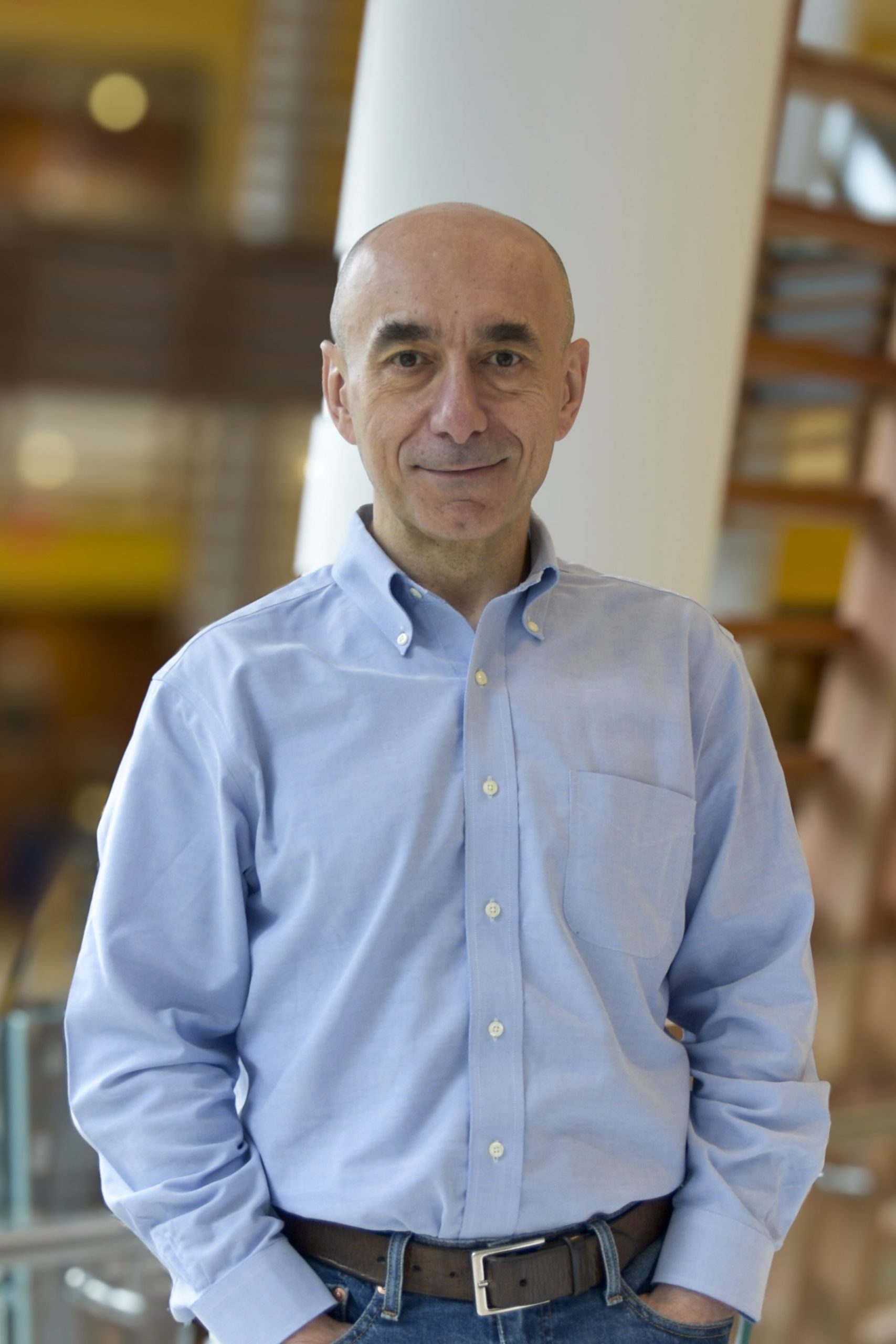
The Mechthild Esser Nemmers Prize in Medical Science, which carries a $350,000 stipend, is given to a physician-scientist whose body of research exhibits outstanding achievement in their discipline as demonstrated by works of lasting significance. Casanova was selected by a jury of distinguished scientists from across the country.
Casanova discovered the rare and common genetic causes of more than 20 severe infections, including severe COVID-19 pneumonia, severe influenza pneumonia, herpes simplex virus encephalitis, tuberculosis and others. His research seeks to identify the genetic causes and immunological mechanisms of infectious diseases, paving the way for strengthening host defense against infection.
“I’m extraordinarily grateful to the jury who selected me for this award,” Casanova said. “The previous laureates of the prize are all luminaries of biomedical research. It’s like a hall of fame and I’m overjoyed to be included.”
Casanova will come to campus to meet with students and faculty and deliver a public lecture in September.
“Jean-Laurent’s paradigm-shifting discoveries have changed the way we think about immunity and life-threatening infections,” said Eric G. Neilson, MD, vice president for Medical Affairs and Lewis Landsberg Dean. “We are delighted to honor him with the 2026 Nemmers Prize in Medical Science, which recognizes outstanding achievements in medical science that improve the health of humankind.”
Decoding the ‘Infection Enigma’
Casanova built his research lab around what he calls the “infection enigma,” a problem posed at the turn of the 20th century. He aims to understand why some children and adults develop a life-threatening illness in the course of primary infection, while most people exposed to the same microbe remain unharmed.
His lab, the St. Giles Laboratory of Human Genetics of Infectious Diseases, is a French-American lab, split between Rockefeller University and Necker Hospital for Sick Children in Paris, France. Under Casanova’s leadership, his team has revealed that genetic variants that affect a person’s ability to fight off infectious agents can confer selective vulnerability to a specific severe infectious disease.
In nearly three decades, between the US and France, Casanova and his lab have discovered the rare and common genetic causes of more than 20 infections. They also discovered what they call “phenocopies” of these genetic disorders; some patients suffer from severe infection because of auto-antibodies that neutralize a component of host defense that is mutated in other patients with the same infection.
Casanova’s discoveries have changed how severe infections are understood and treated. One of his biggest breakthroughs came during the COVID-19 pandemic, when his team identified harmful autoantibodies that attacked a component of host defense instead of the virus. The team first found that rare genetic mutations prevented some people from producing type I interferons or responding to them. They then discovered that autoantibodies blocking type I interferons, which are crucial for fighting viral infections, could bear the same consequences.
This breakthrough helped to explain why some people get critically ill whereas others recover quickly. The findings showed that these auto-antibodies were responsible for about 15 percent of severe COVID-19 cases and 20 percent of deaths.
Casanova’s team found these autoantibodies in other severe viral infections, such as seasonal and even avian influenza, and West Nile virus encephalitis. Remarkably, they account for nearly 40 percent of West Nile virus encephalitis; now by far the best-understood human infectious disease.
An international member of the National Academy of Sciences, Casanova’s work has been recognized with other prizes including the Novo Nordisk Prize in 2025, the Stanley J. Korsmeyer Award in 2016, and the Robert Koch Award in 2014, among others. He received doctorates honoris causa from several prestigious European universities, including the University of Zürich, the University of Aarhus and the Catholic University of Leuven.
Casanova received his PhD from Paris Pierre et Marie Curie University in 1992. He went on to earn a MD from Paris Descartes University in 1995. Following a residency in pediatrics, he did a clinical and research fellowship in pediatric immunology and hematology at the Necker Hospital and School of Medicine in Paris.
About the Nemmers Prizes
One of five Nemmers Prizes awarded by the University, the Mechthild Esser Nemmers Prize in Medical Science is made possible by a generous gift by the late Erwin Esser Nemmers and the late Frederic Esser Nemmers. It is the fourth Nemmers Prize to be established by Northwestern University and joins the Erwin Plein Nemmers Prize in Economics, the Frederic Esser Nemmers Prize in Mathematics, the Michael Ludwig Nemmers Prize in Music Composition and the Nemmers Prize in Earth Sciences, established in 2016. The awards are given every other year.
In 2016, the inaugural award was presented to Huda Zoghbi, MD, a Howard Hughes Medical Institute investigator and professor at Baylor College of Medicine, whose research has focused on Rett syndrome and other neurological disorders.
Stuart H. Orkin, MD, an investigator of the Howard Hughes Medical Institute at Boston Children’s Hospital and Dana-Farber Cancer Institute, whose research relates to blood cell development and the genetic basis of blood disorders, received the award in 2018.
Jeremy Nathans, MD, PhD, an investigator of the Howard Hughes Medical Institute and a professor at Johns Hopkins University School of Medicine, known for his landmark discoveries into the molecular mechanisms of visual system development, function and disease, was the recipient of the 2022 prize.
Jeffrey Gordon, MD, a professor at Washington University in St. Louis, who is often referred to as the “father of microbiome research,” received the prize in 2024 for his research which has transformed the understanding of human health and how it is shaped by the gut microbiome.
Read more about the Mechthild Esser Nemmers Prize in Medical Science on the website.
Legal Disclaimer:
EIN Presswire provides this news content "as is" without warranty of any kind. We do not accept any responsibility or liability for the accuracy, content, images, videos, licenses, completeness, legality, or reliability of the information contained in this article. If you have any complaints or copyright issues related to this article, kindly contact the author above.
